eco
Waterless Car Wash in the UAE: How It Actually Works
A waterless wash sounds like magic or a scratch risk. It is neither. Here is the real chemistry and technique, the myths, and the point where you must switch to steam.
What "waterless" really means
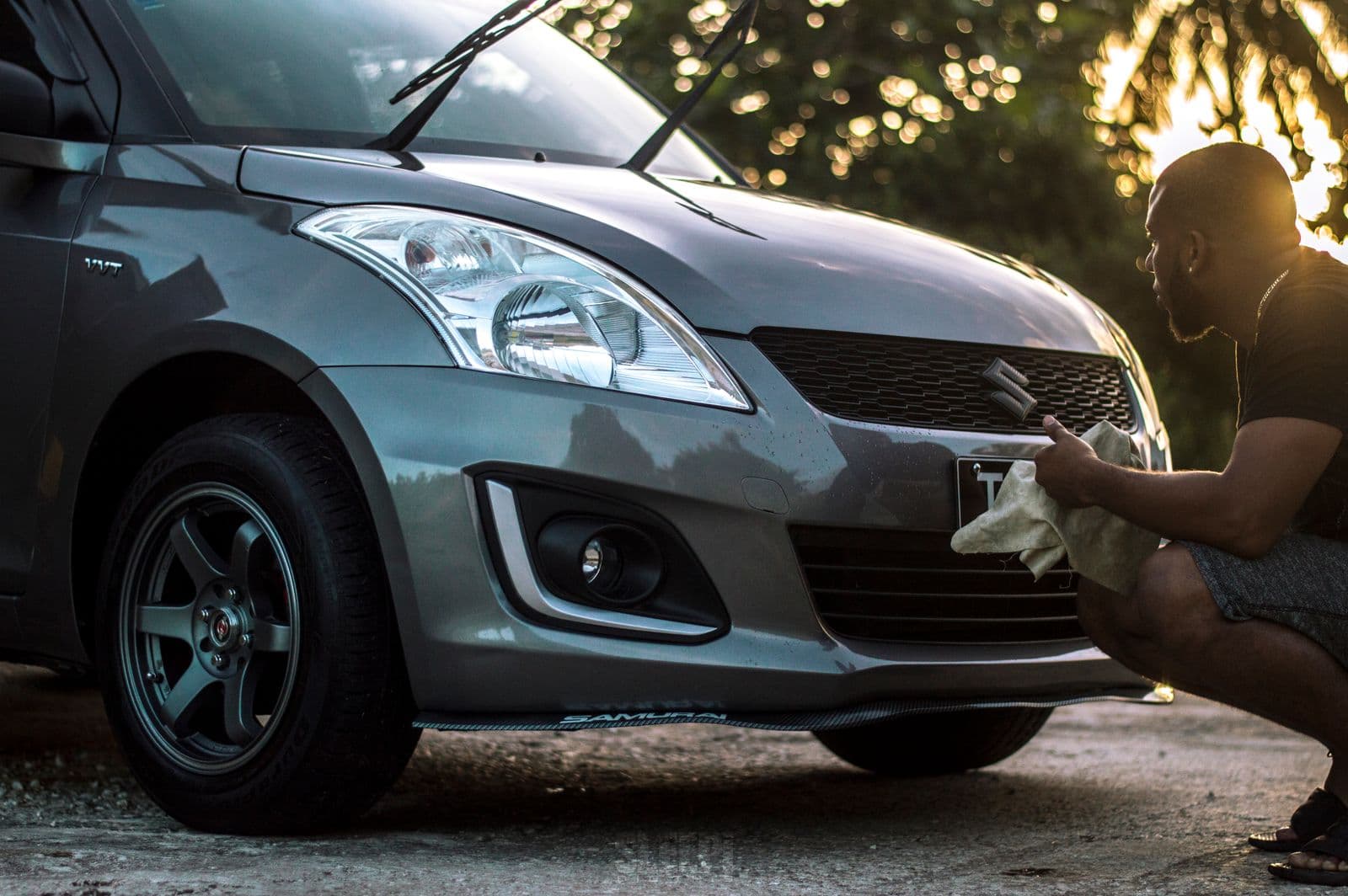
A waterless wash does not mean no liquid at all. It means no rinse and no flowing water. Instead of blasting dirt off with pressure, you spray a specially formulated liquid onto a panel, let it work for a moment, then wipe the panel with a plush microfibre towel. A whole car is cleaned with roughly one litre of product rather than the 150 to 200 litres a hose consumes. For everyday UAE driving conditions, dust, traffic film and fingerprints, it is a complete exterior clean, not a shortcut.
The reason people are sceptical is intuitive: surely wiping a dusty car will scratch it? That instinct is correct for a dry cloth on dry dirt. The whole job of the chemistry is to make sure that never happens. Once you understand the mechanism, the method stops looking risky and starts looking obvious.
The chemistry: encapsulation and lubricity
Two things are happening in that spray. The first is encapsulation. Surfactant molecules surround each speck of grit and pull it away from the paint surface, holding it in suspension inside a droplet. The dirt is no longer stuck to the clear coat, it is floating in the liquid film sitting on top of it.
The second is lubricity. Polymer lubricants create a slick, slippery layer between the dirt and the paint. When the microfibre passes over the panel, the encapsulated grit glides into the towel rather than being dragged across the surface. Lift, then wipe, in that order. This is why our eco waterless wash can clean safely without a bucket of rinse water in sight.
It helps to contrast this with a traditional bucket wash. Even a careful two-bucket method drags a mitt across the paint while grit is still sitting on the surface, and every pass risks a fine scratch. Encapsulation changes the sequence: the dirt is chemically released and floated before anything touches it, so the microfibre meets suspended particles rather than bonded ones. That reordering, release first and contact second, is the real reason a low-water wash can be gentler than a hose and bucket, not harsher.
The technique, step by step
Good technique is most of the result. A careless waterless wash can scratch. A careful one is safer than a petrol-station brush.
- 1Assess the panel. If there is caked mud or heavy sand, stop and pre-treat with steam. Do not proceed dry.
- 2Spray one panel generously and let the chemistry dwell for a few seconds.
- 3Wipe in straight lines with light pressure, one direction, not circles.
- 4Flip to a clean face of the towel constantly, and swap towels the moment one is loaded.
- 5Follow with a second, dry plush microfibre to buff to a streak-free finish.
Working one panel at a time keeps the product wet where it needs to be and stops dust settling back onto a cleaned area.
Microfibre: GSM and the fold-to-eight rule
The towel is not a detail, it is the tool. Microfibre is measured in GSM, grams per square metre, which reflects density and plushness. A thin 200 GSM cloth is for glass and light buffing. For lifting dirt off paint you want a plush 400 to 500 GSM towel with a deep pile that pulls grit up into the fibres and away from the surface.
Then there is the fold-to-eight rule. Fold a towel in half, then in half again, and you have eight clean working faces, four per side. Use one face until it shows dirt, then rotate to the next. Eight faces means you rarely wipe a panel with grit you just picked up. When all eight are used, that towel is done. This single habit is the difference between a swirl-free finish and a scratched one, which is why a proper crew carries a stack of towels, not one rag.
Myth versus fact
| Myth | Fact |
|---|---|
| Waterless washing always scratches | Correct technique lifts grit before contact, so it does not |
| It is only a light dust wipe | It removes traffic film, pollen, bird mess and fingerprints |
| You need lots of water to clean a car | Volume does not clean, chemistry and technique do |
| It ruins ceramic coatings | pH-neutral formulas maintain coatings, not strip them |
| It works on any car in any state | Heavy mud and wet sand need steam first |
When waterless is the wrong choice
Honesty about limits is part of doing this well. There is a clear cutoff. If a panel is covered in thick mud, wet sand from a desert trip, or a heavy layer of caked grime, wiping it dry, even with lubricants, risks dragging particles across the clear coat. That is the one scenario where waterless is not the answer.
The fix is not to force it. A steam exterior wash softens and floats heavy soil with low-pressure vapour first, or a rinseless pre-treat loosens it, and only then does contact washing begin. A crew that reaches for steam on a sand-caked car is protecting your paint, not upselling you. You can see how the low-water methods fit together on our features page.
Waterless on ceramic-coated and wrapped cars
Owners of coated and wrapped cars are often the most cautious, and they should be. High-alkaline detergents shorten the life of a ceramic coating, and high-pressure jets can creep under the edges of a vinyl wrap. Waterless washing avoids both problems. The pH-neutral chemistry is designed to sit alongside a coating and even top up its hydrophobic behaviour, while the gentle wipe never forces water under a wrap seam. For these cars, low-water is frequently the recommended method, not just an acceptable one. If you are fighting water spots on a dark coated car, our guide on hard water spots pairs well with this one.
Getting the best result
A few practical habits make a visible difference:
- Never wash a hot panel in direct sun if you can avoid it. Product flashes off too fast and streaks.
- Use dedicated towels for wheels and never let them touch paint.
- Keep glass separate with its own thin cloth for a clear finish.
- Book regularly. A lightly soiled car is quick and completely safe to wash waterless, while a neglected one drifts toward needing steam.
Understood properly, a waterless wash in the UAE is not a compromise. It is a deliberate, low-water method that cleans everyday soil safely, protects coatings, and only steps aside when heavy sand demands steam. Book our eco waterless wash or send an enquiry through our contact page and the crew brings the method to your door.
Frequently asked questions
Does a waterless car wash scratch the paint?
Not when done correctly. The lubricating polymers let grit slide off instead of grinding in, and a clean plush microfibre is folded to a fresh face often. Scratches come from bad technique, not the method itself.
Can I use a waterless wash on a really dirty car?
No. Thick mud, wet sand or caked-on soil must be softened first with steam or a rinseless pre-treat. Wiping heavy grit dry is the one situation where waterless is the wrong choice.
Is waterless washing safe for ceramic-coated or wrapped cars?
Yes, and it is one of the best matches. pH-neutral chemistry maintains the coating rather than stripping it, and the gentle wipe suits vinyl wraps that dislike high-pressure jets.
How is one litre enough to clean a whole car?
You are not rinsing, you are lifting. The spray does the chemical work of encapsulating dirt so the microfibre carries it away. Water volume is not what makes a car clean, technique is.
How long does a waterless exterior wash take?
A typical car takes around twenty to thirty minutes depending on condition. Book our eco waterless wash online and the crew comes to your parking bay.