car-care
Desert Sand and Car Paint Damage: What Really Happens
Sand is not just dirt. It is hard silica that scratches paint when you wipe it dry or when the wind drives it. Here is the real mechanism and the fix.
Most people think of desert sand as just a heavier kind of dust. It is not. Sand is largely silica, a mineral harder than the clear coat protecting your car's colour, and that single fact explains why the UAE is so hard on paint. Understanding the physical reality changes how you clean, and stops you from scratching your own car.
Sand is harder than your paint
Automotive clear coat is tough, but on the mineral hardness scale it sits below quartz silica, the main component of desert sand. When a sand grain moves across a panel with any pressure behind it, it does not slide harmlessly. It cuts. Each grain leaves a microscopic groove, and thousands of those grooves scatter light, which your eye reads as a dull, hazy, swirled finish. This is why a car that has never been in a crash can still look tired: it has been sanded, a grain at a time, by the environment and by careless wiping.
Wind abrasion hits the front of the car first
You do not have to touch a car for sand to damage it. Wind-driven sand acts like a very fine, slow sandblaster, and it concentrates on the leading edges that face into the wind:
- The front edge of the bonnet
- The A-pillars and the base of the windscreen
- Wing mirror backs and housings
- The nose, grille surround and front bumper
Look at any older UAE car and these are the areas where paint thins and dulls first. There is no way to stop wind entirely, but a well-maintained protective layer takes the abrasion instead of the clear coat, and it is far cheaper to renew than to respray.
The single worst thing you can do
If you take one thing from this article, make it this: never dry-wipe a dusty car. Reaching for a shop rag, a tissue, or your sleeve to clear dust off a panel or windscreen is the most common self-inflicted paint damage in the country. You are pressing hard silica against soft clear coat and dragging it in circles. Every wipe adds scratches you will see the moment the sun hits the panel at an angle.
Dust always comes off wet or lubricated, never dry. Use a proper spray and clean microfibre, or a method built to encapsulate grit.
Where sand hides and does damage you cannot see
Panels are only half the story. Sand works its way into places you rarely clean, and that is where it does slow structural harm:
- Door shuts and boot and bonnet seals, where it grinds against rubber and paint every time you close them
- Wheel arches and behind the wheels, where it holds moisture and abrades
- Grilles and radiator areas, where it restricts airflow
- Window channels, where it scratches glass as the window travels
After a desert trip, this trapped sand is the priority, more than the visible dust on the panels.
Do and don't: cleaning a sandy car
| Do | Don't |
|---|---|
| Flush loose sand with steam or a rinse first | Brush or wipe dry sand off dry paint |
| Use a lubricating, encapsulating product | Use a household cloth or paper towel |
| Work top to bottom, dirtiest area last | Reuse a gritty cloth on clean panels |
| Clear door shuts, arches and seals | Ignore hidden sand because panels look clean |
| Let chemistry lift grit, then wipe once | Scrub back and forth over the same spot |
The post-desert-trip protocol
Dune drives and desert camps are part of life here, and they load a car with sand inside and out. A simple protocol keeps the fun from costing you paint:
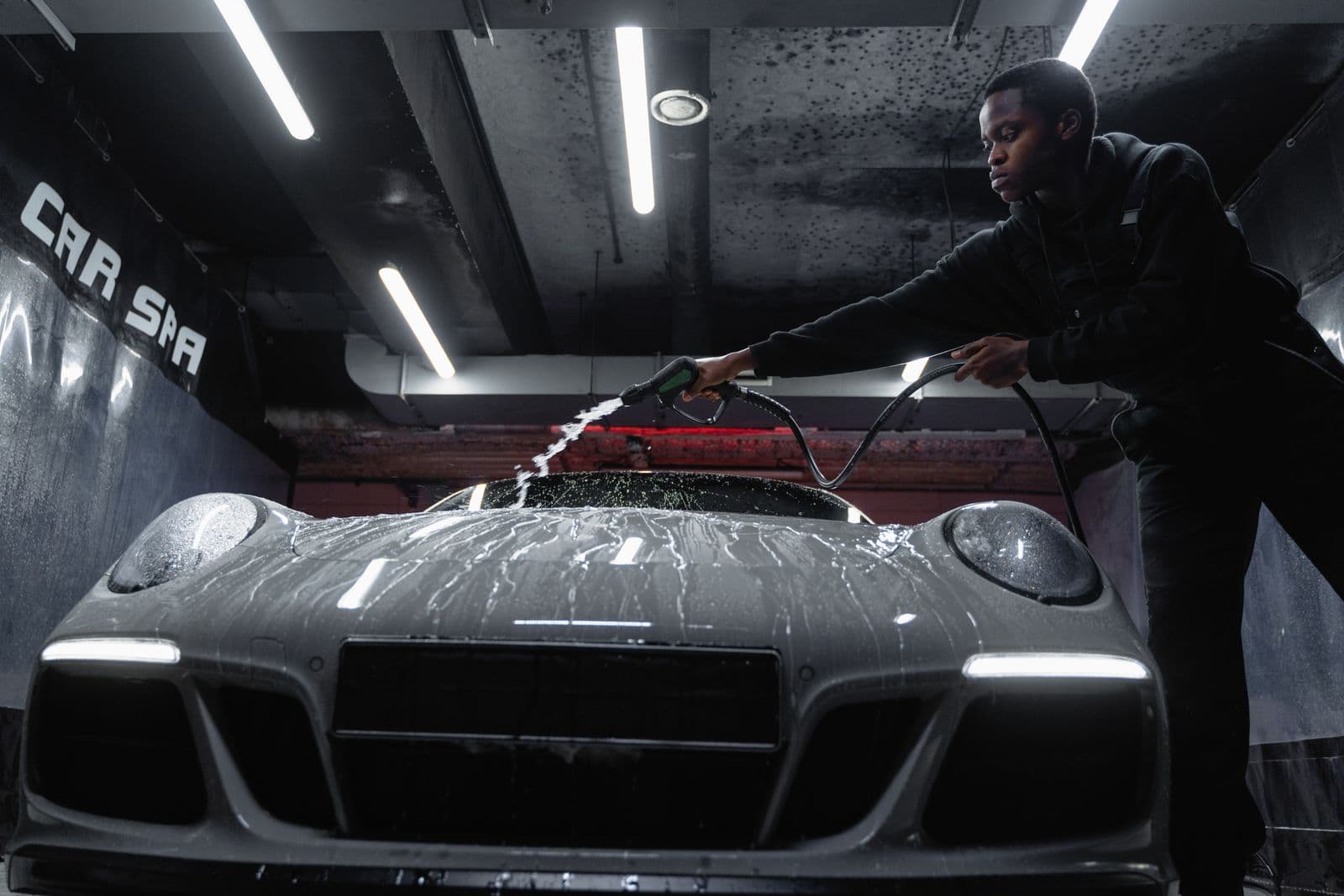
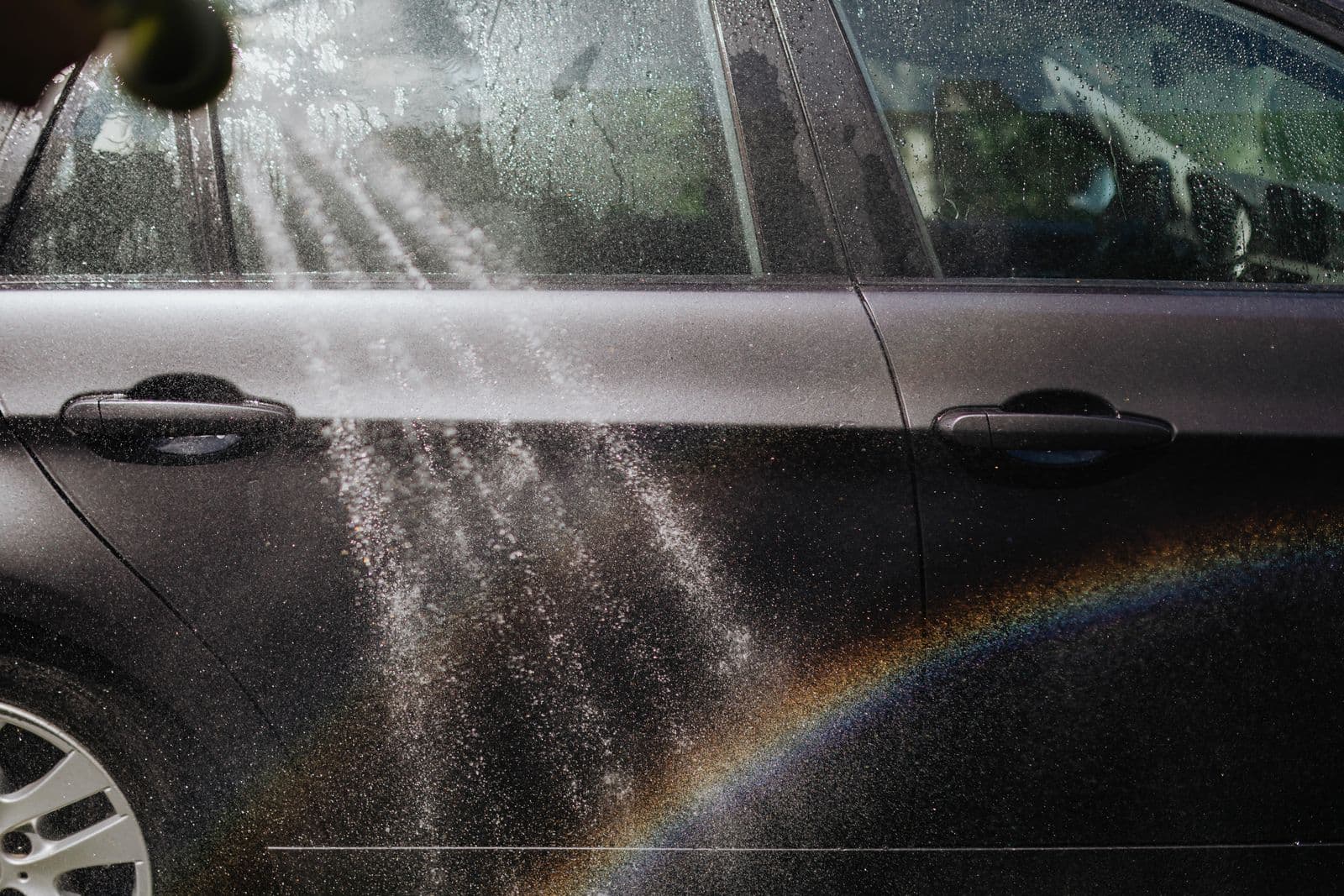
- 1Before touching the panels, flush wheel arches, door shuts, grilles and seals to move loose sand out.
- 2Never brush dry sand off bodywork; soak and lift it instead.
- 3Do a full encapsulating wash so any remaining grit is surrounded and removed cleanly.
- 4Check and clear window channels and boot seals where sand collects.
- 5Reassess your protective layer, since off-road sand is abrasive to any coating.
Because sand and salt often travel together near the coast and after trips, our sand and salt removal service is built for exactly this job, flushing hidden grit and lifting it without dragging it across the paint.
How encapsulation chemistry actually protects
The reason a proper waterless or low-water wash is safe on sandy paint comes down to chemistry, not luck. High-lubricity encapsulating sprays surround each particle of grit in a slick shell that breaks its grip on the surface and holds it suspended. When you wipe with a clean microfibre, the grain rolls into the cloth rather than being dragged across the clear coat. Compare that to a dry wipe, which does the opposite, and the difference in outcome over a year is enormous. Our waterless car wash explainer walks through the process step by step.
Why sand damage is expensive to reverse
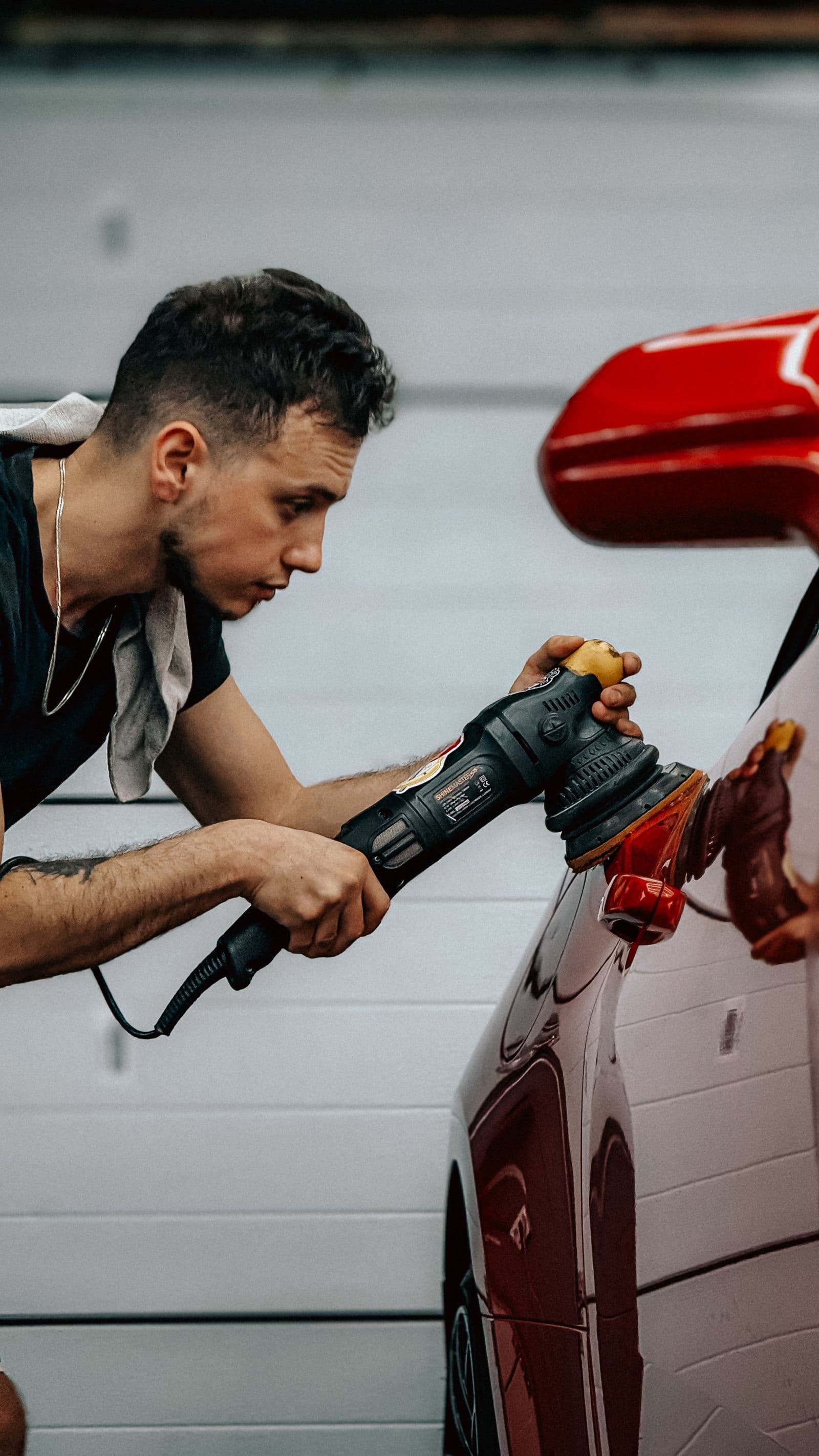
The insidious thing about sand abrasion is that it is cumulative and mostly invisible until it is bad. You do not notice a single micro-scratch, but after a couple of years of dry wipes and wind exposure the clear coat is covered in them, and the car reads as permanently dull no matter how clean it is. Fixing that means machine polishing, which physically removes a thin layer of clear coat to level the scratches out. Clear coat is finite; it can only be polished so many times before it is too thin to protect the colour, at which point the only fix is a respray.
Prevention is far cheaper than correction. Every dry wipe you avoid, every properly lubricated clean, and every intact layer of protection saves clear coat you cannot get back. In a sand-heavy environment that maths is stark: gentle habits now versus a polish or respray later. The cars that still look sharp after five UAE years are almost always the ones that were never dry-wiped.
This matters most where the desert meets home
Communities on the desert edge feel this hardest. Cars in DAMAC Hills and out toward Al Shamkha sit closer to open sand and take a heavier dust and abrasion load than towers deep in the city core. If that is where you live, the little-and-often habit matters even more: frequent, gentle, properly lubricated cleaning keeps sand from ever building into the abrasive layer that quietly ruins a finish. Handle sand correctly and your paint can look sharp for years, even here.
Frequently asked questions
Why does desert sand scratch car paint so easily?
Sand is mostly silica, which is harder than automotive clear coat. When a grain is dragged across the surface, by wind, a cloth or a dry hand, it cuts a tiny groove. Thousands of these grooves become the dull haze of scratched paint.
Is it really that bad to wipe dust off with a dry rag?
Yes, it is the fastest way to scratch your own car. A dry rag on dusty paint grinds silica in circles across the clear coat. Always lift dust with a lubricating spray and clean microfibre, or a waterless wash that encapsulates grit.
What should I do after a desert trip or dune drive?
Rinse or steam sand out of wheel arches, door shuts and grilles before it works into moving parts and seals, then do a proper encapsulating wash. Do not brush dry sand off panels. Book a dedicated sand and salt removal if it is heavy.
Where does sand build up worst on a car?
In door shuts, boot and bonnet seals, wheel arches, wing mirror backs, grilles and the leading edges of the bonnet and A-pillars. Wind-driven sand hits those front edges hardest, which is why they show fine abrasion first.
Can a waterless wash handle a genuinely sandy car?
For normal daily dust, yes. Encapsulating chemistry surrounds each grain so it lifts away instead of dragging. For thick post-desert sand, a low-pressure steam or rinse stage is used first to flush loose grit, then encapsulation finishes it safely.